
Original Practice Shakespeare
What exactly is Original Practice Shakespeare and why are we doing it?
It’s a harder question to answer than I originally thought.
There are so many layers to what we do and why we do it.
It all starts with what we know about Elizabethan actors.
It’s been an exciting puzzle to put together.
From discovered and re-examined bits of history, we’ve been able to piece together a snapshot of what it was like to be an Elizabethan actor, breadcrumb style.
These are our breadcrumbs.
Cue Scripts
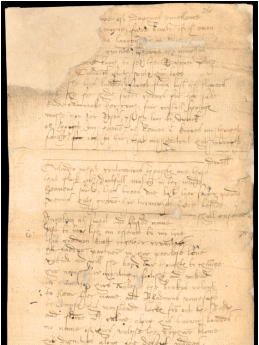
This is a piece of the cue script for the part of Orlando Furioso c.1591.
From this piece of evidence we’ve extrapolated the following information
Elizabethan actors rarely, if ever, got the full text of the play.
Actors received only their part in the form of a scroll.
Actors didn’t know the other actor’s parts, only the last three words of the line before their own.
Actor’s could reference their cue scripts on and offstage
In the same way that the violinist doesn’t know the trombone part, the actor playing the part of Orlando doesn’t know the part of Rosalind.
Promptbook
If the cue script is like the violin’s individual part, the promptbook is like the conductor’s score.
The promptbook was kept by the prompter, the only person in the whole show to have the entire text.
Like today’s stage managers, the prompter kept tabs on scenery and props used, when an offstage sound effect was needed, what costumes actors wore, etc.
This person also kept the show on track.
If none of the actors knew what the whole show looked like, someone had to keep the show moving.
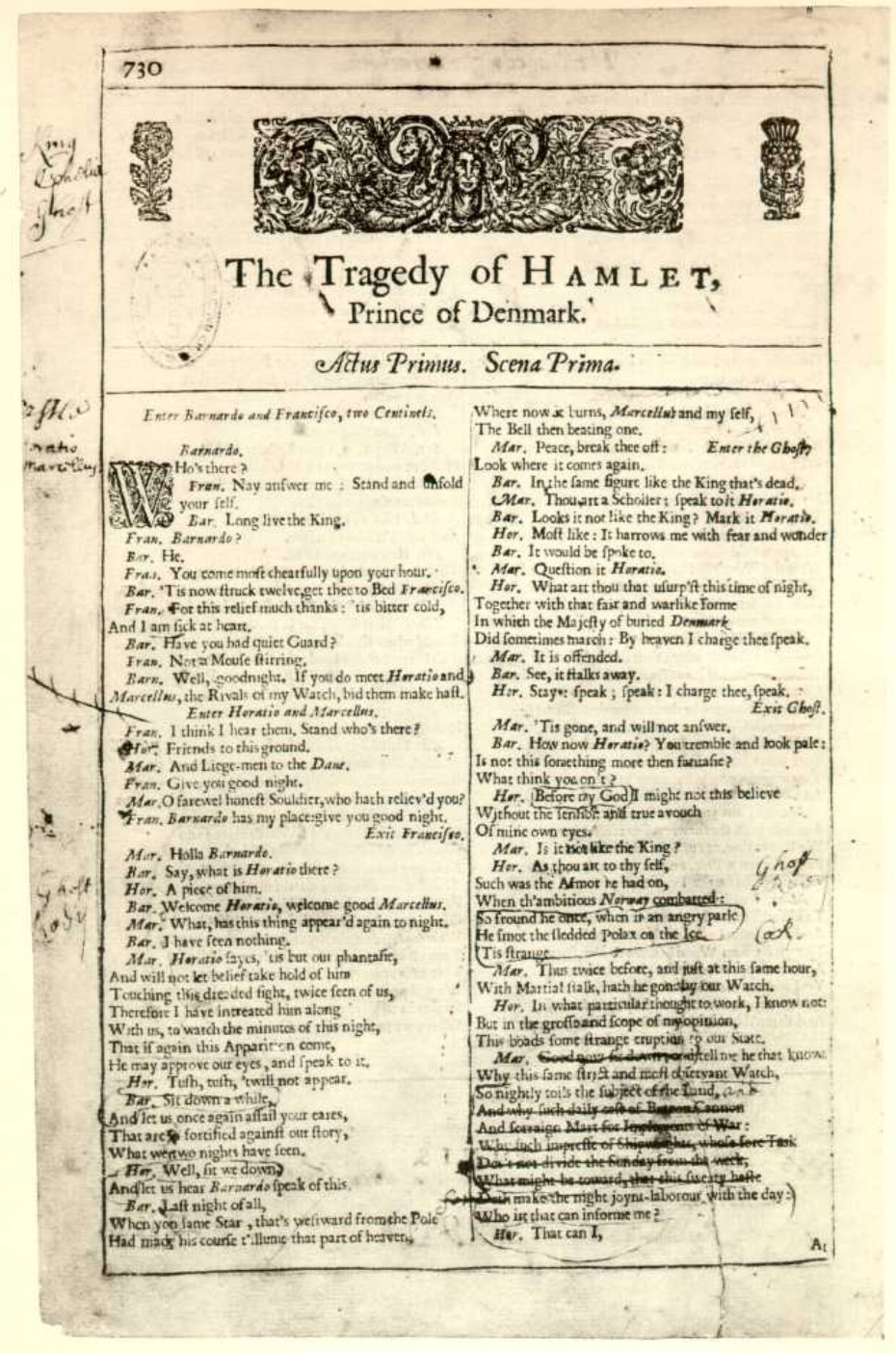
This is the first page of the promptbook used for The Smock Alley Theater’s production of Hamlet, c. 1670, Dublin, Ireland.
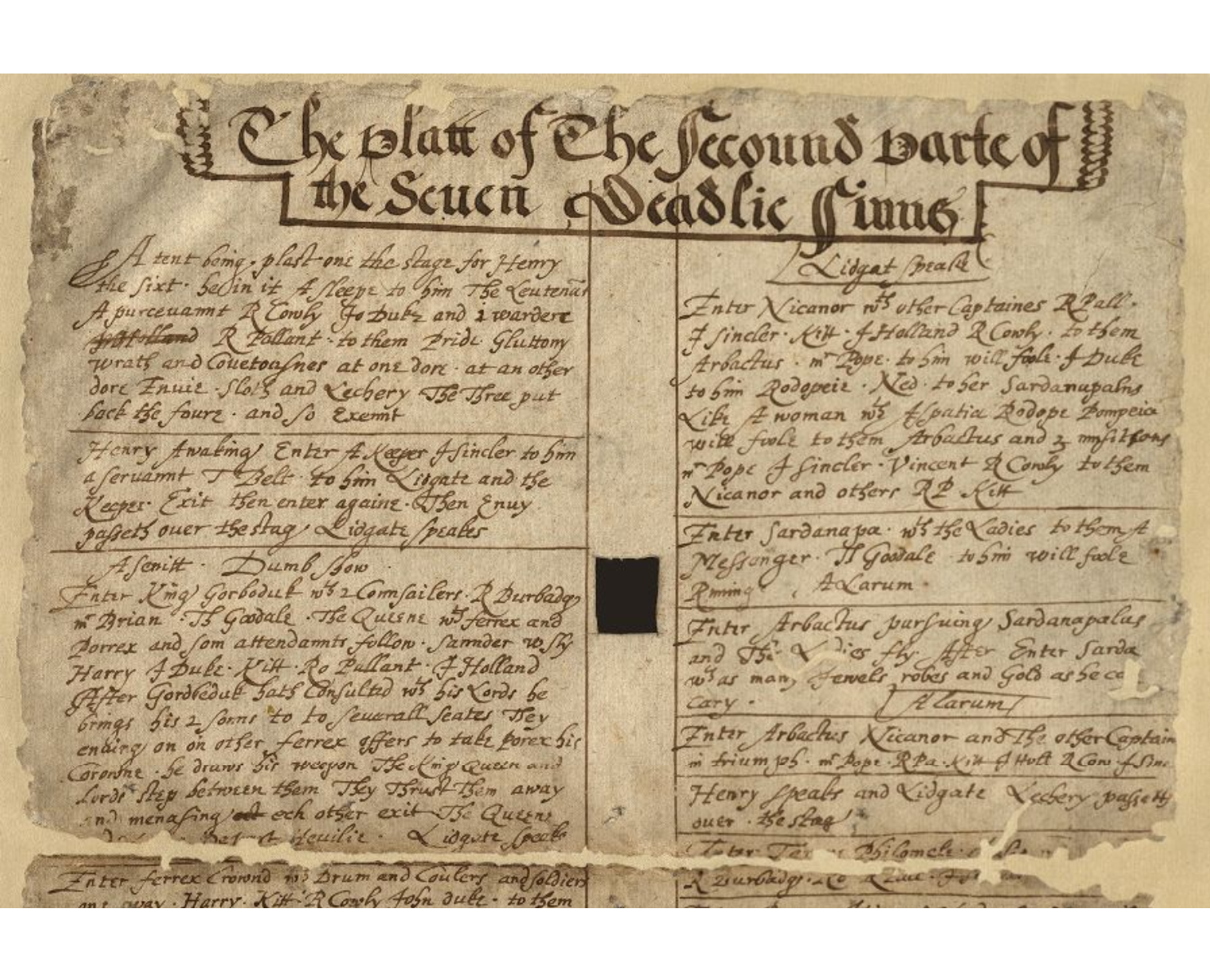
This is “The Platt of The Second Parte of the Seven Deadly Sinns.”
This is, essentially, an Elizabethan actor’s cheat sheet.
While they didn’t need to know the words the other actors were saying, they did need to know the plot of the show.
The platt is just that. The plot.
Kept in the backstage areas for actors to reference mid-show.
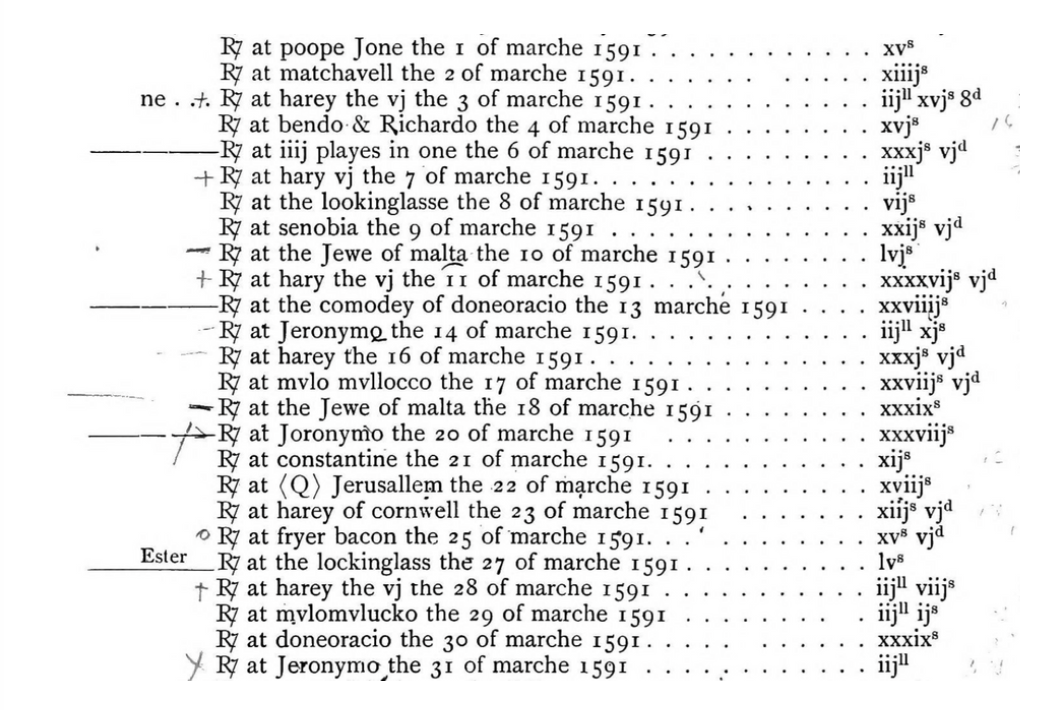
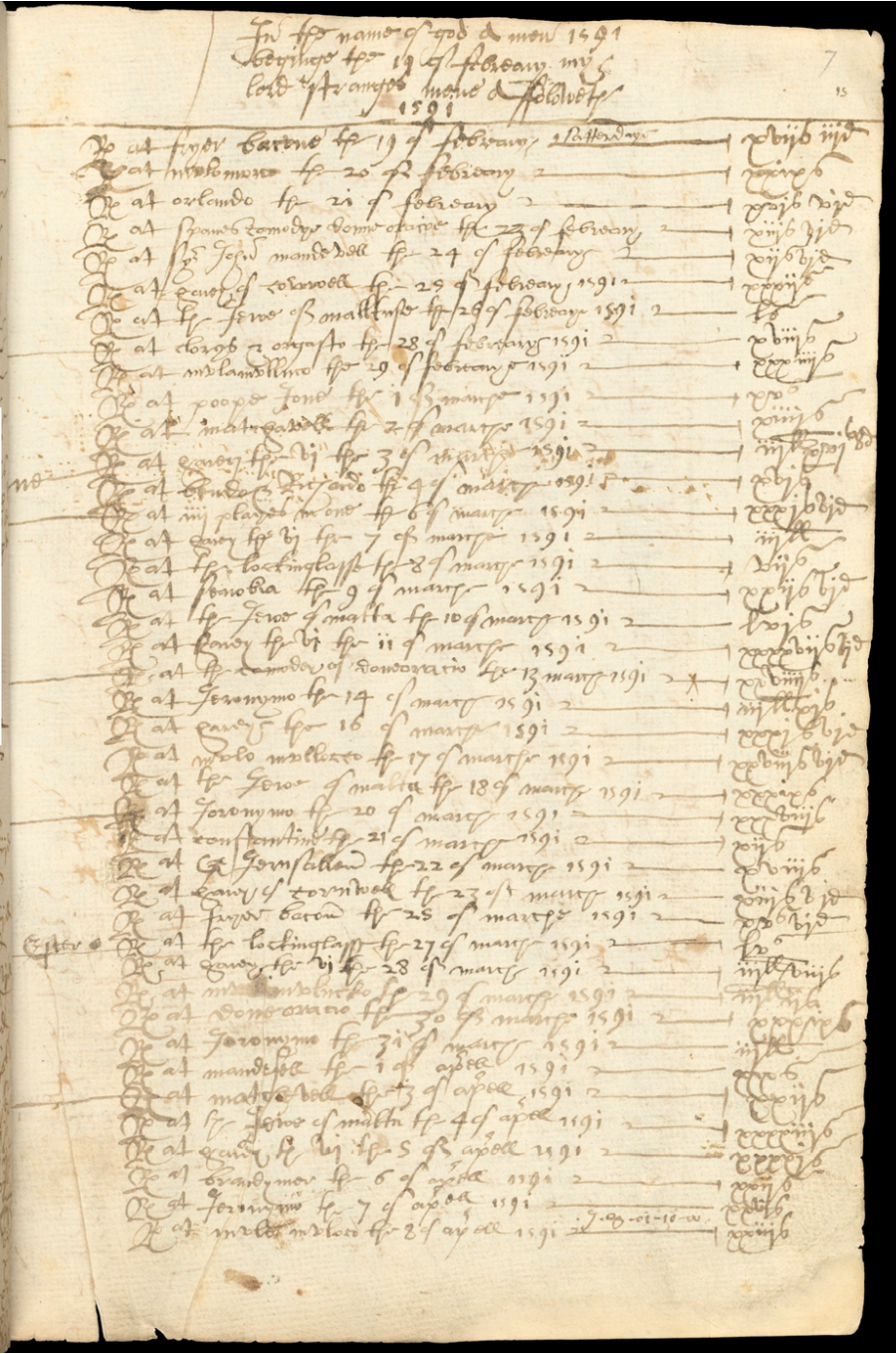
Henslowe was an entrepreneurial superstar.
He built and managed The Rose Theater (1587), The Fortune Theater (1600), and The Hope Theater (1613).
This has been a most lucrative resource, as we’ve been able to glean several bits of information from it.
The Elizabethan actor’s schedule was whack. These actors performed a different show almost every day.
There weren’t separate actors for every show, the theater had their repertory actors that just kept dozens of shows in their heads at any given time
• Which makes the use of cue scripts even more necessary.
Since there is no record of a director being hired, we think they didn’t have directors.
New plays were commissioned and debuted in record time. One recorded transaction was the commission of a new play to be written by 5 writers and performed within a week.
Which means that actors had very little time to rehearse, sometimes just one day. The actors were so in sync and trusted each other so much that they could pick up a text and perform it in less than a week.
All this to say, there is method to our madness.
Using these documents, we can emulate their rehearsal process and style.
From a Shakespeare nerd perspective, it is terribly exciting.
What this kind of rehearsal process looks like today, needs a post of its own.
Next time!
:)
LCB